Initial guidance
Key points
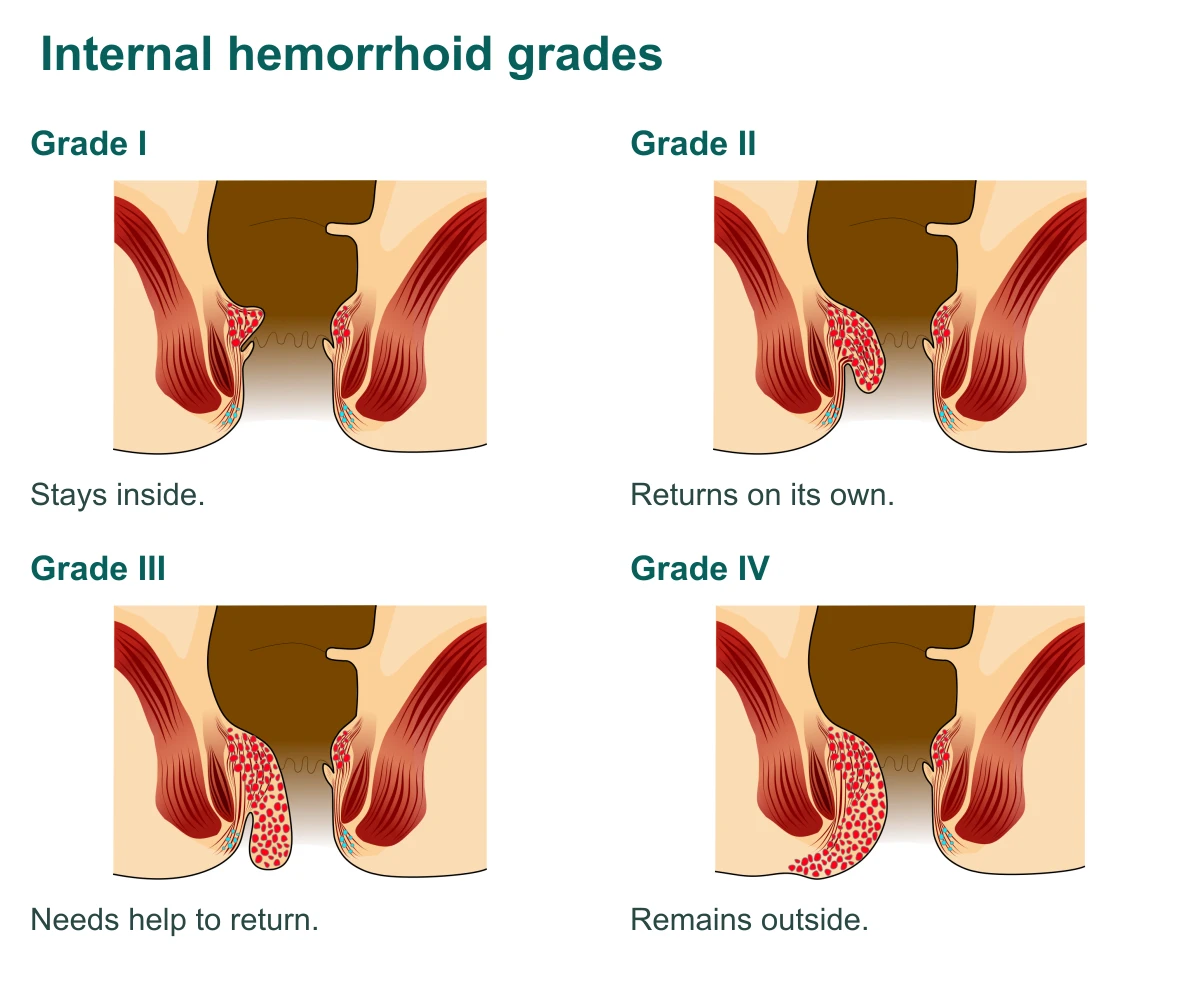
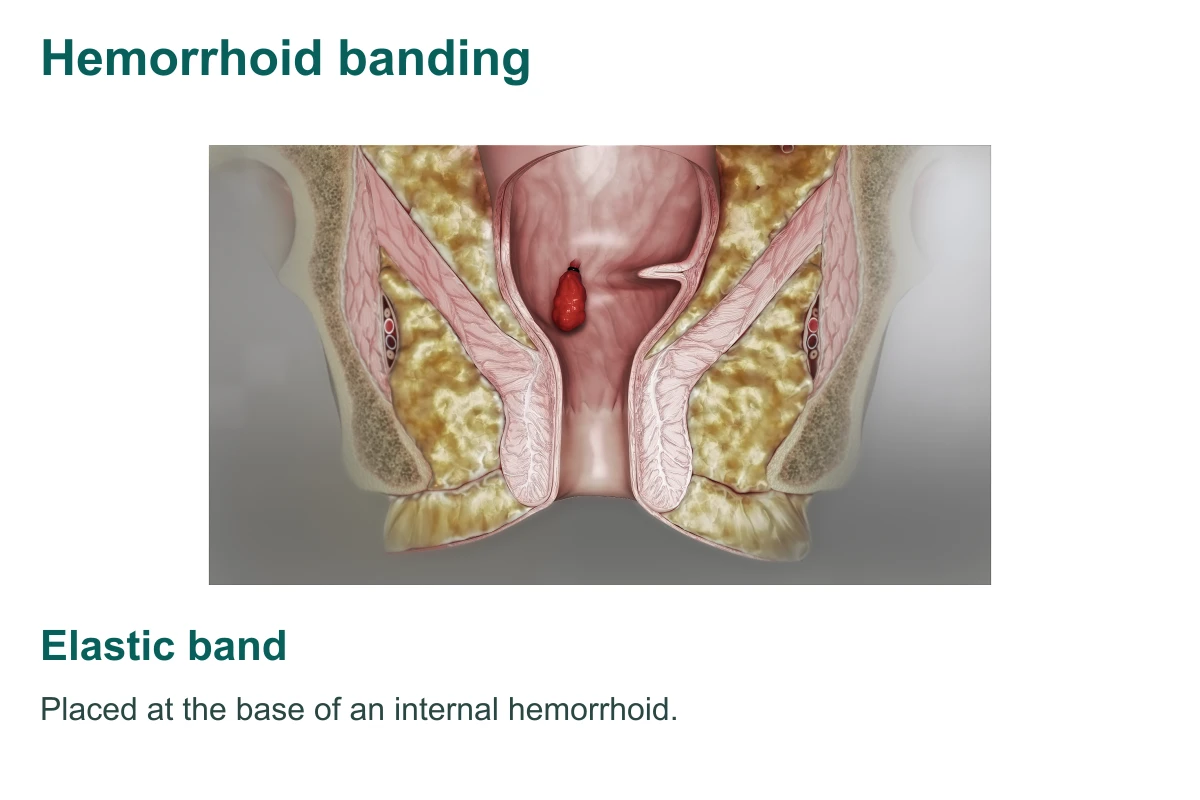
Rubber band ligation is an office procedure for symptomatic internal hemorrhoids. A small band placed around the base of internal tissue interrupts its blood supply. The tissue then shrinks and falls away, leaving a scar that helps fix the lining in place. It is mainly used for grades I and II and some grade III hemorrhoids, usually when first-line measures have not been enough.
The band acts on the internal hemorrhoid
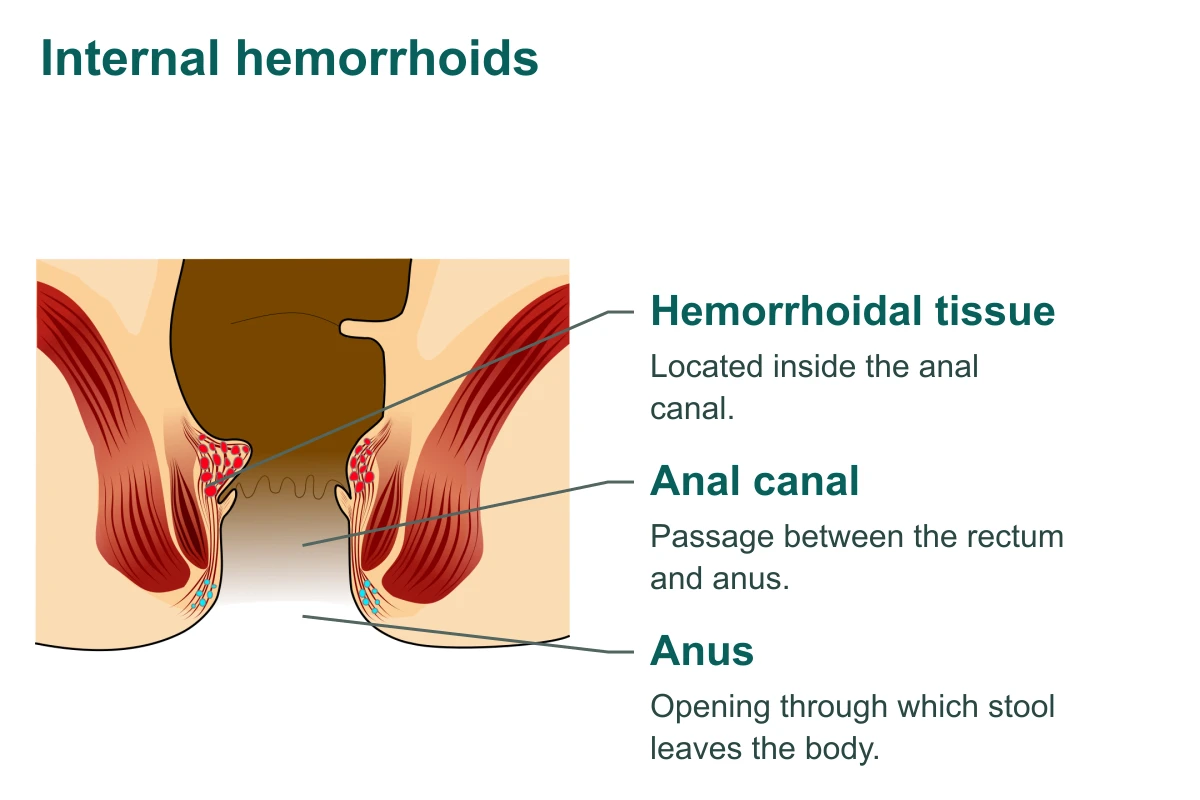
During treatment, an anoscope provides a view of the anal canal and the band is placed above the dentate line at the base of the internal hemorrhoidal tissue. Without its blood supply, the tissue falls away days later, and healing helps reduce prolapse.
This explains an important distinction: current guidelines place conventional banding among treatments for internal hemorrhoidal disease. An external hemorrhoid, external thrombosis or a substantial external component changes the approach and requires reassessment.
When may banding be considered?
ASCRS guidelines recommend office procedures for most symptomatic grade I and II internal hemorrhoids and selected grade III cases with symptoms despite conservative care. The 2026 AGA update also includes banding for internal hemorrhoids with bleeding or prolapse.
Grade is not the only factor. The main symptom, extent of prolapse, associated external disease, response to fiber and bowel-habit changes, and history affecting procedural risk also matter.
Assessment confirms whether bleeding or prolapse is actually hemorrhoidal
Before treatment, examination distinguishes internal hemorrhoids from other causes of bleeding, pain or an anal mass. Anoscopy views the canal and identifies internal tissue that might explain symptoms.
This avoids choosing a correct procedure for the wrong diagnosis. NIDDK and AGA agree that diagnosis starts with history and examination. AGA recommends anoscopy where possible before treating suspected hemorrhoidal disease.
What to expect after band placement
Pressure or discomfort is common in the first few days. Some bleeding may occur when treated tissue falls away. More than one session may be needed because treating all the tissue at once is not always appropriate.
Banding is an option before considering hemorrhoidectomy for patients with internal disease suited to office treatment. More advanced prolapse, a significant external component or persistent symptoms after office procedures may change the strategy.
Heavy bleeding, fever or severe pain after treatment needs attention
Most complications are uncommon, but banding is not risk-free. ASCRS describes significant bleeding as rare and notes it may be delayed until treated tissue separates. Serious infection and pelvic sepsis have also been reported, although infrequently.
Anticoagulants and antiplatelet medicines require specific review before treatment because they may alter bleeding risk. This is an individual medical decision: do not stop these medicines yourself.
Before seeking an alternative to surgery, identify your hemorrhoid type
Banding has a useful role between conservative care and surgery for certain patients with internal hemorrhoids. IMSS also recognizes rubber band ligation among treatments for appropriately selected patients.
Dr. Eduardo Navarro treats hemorrhoidal disease. For bleeding, prolapse or recurring symptoms despite habit changes and previous treatment, assessment confirms the disease type and grade and compares appropriate next steps.
Clinical sources
Clinical sources consulted
This guide draws on information from medical and public health institutions to help you understand the topic.
- ASCRSclinical guideline for hemorrhoid management (2024)View source
- AGAclinical update on hemorrhoid diagnosis and treatment (2026)View source
- NIDDKtreatment of hemorrhoidsView source
- IMSShemorrhoidal disease and treatment optionsView source
This content is informational and does not replace a medical assessment.