Initial guidance
Key points
Surgery is considered mainly for symptomatic external hemorrhoids, combined internal and external disease with advanced prolapse, grade IV internal hemorrhoids or grade III disease that remains troublesome after appropriate treatment. Grade is not the only factor: symptoms, the tissue involved and treatments already tried also matter.
Signs that it is time to decide the next step
If hemorrhoids protrude during bowel movements and need to be pushed back, remain prolapsed, bleed repeatedly or have a troublesome external component, the discussion goes beyond creams and habits. Assessment can determine whether an office procedure can still address the problem or surgery offers a more suitable solution.
A problem that returns after treatment or continues to affect hygiene, work, exercise or daily life also deserves reassessment. The aim is not surgery for its own sake, but to stop repeating treatments that no longer suit the hemorrhoidal disease present.
- Prolapse that requires manual reduction or can no longer be reduced.
- Symptomatic internal and external hemorrhoids together.
- Recurrent bleeding that continues after its cause has been investigated and the hemorrhoids appropriately treated.
- Repeated external thrombosis or an acute episode with severe pain requiring early assessment.
- Symptoms that persist or return after conservative care or appropriately selected office procedures.
Grades III and IV: when surgery becomes more likely
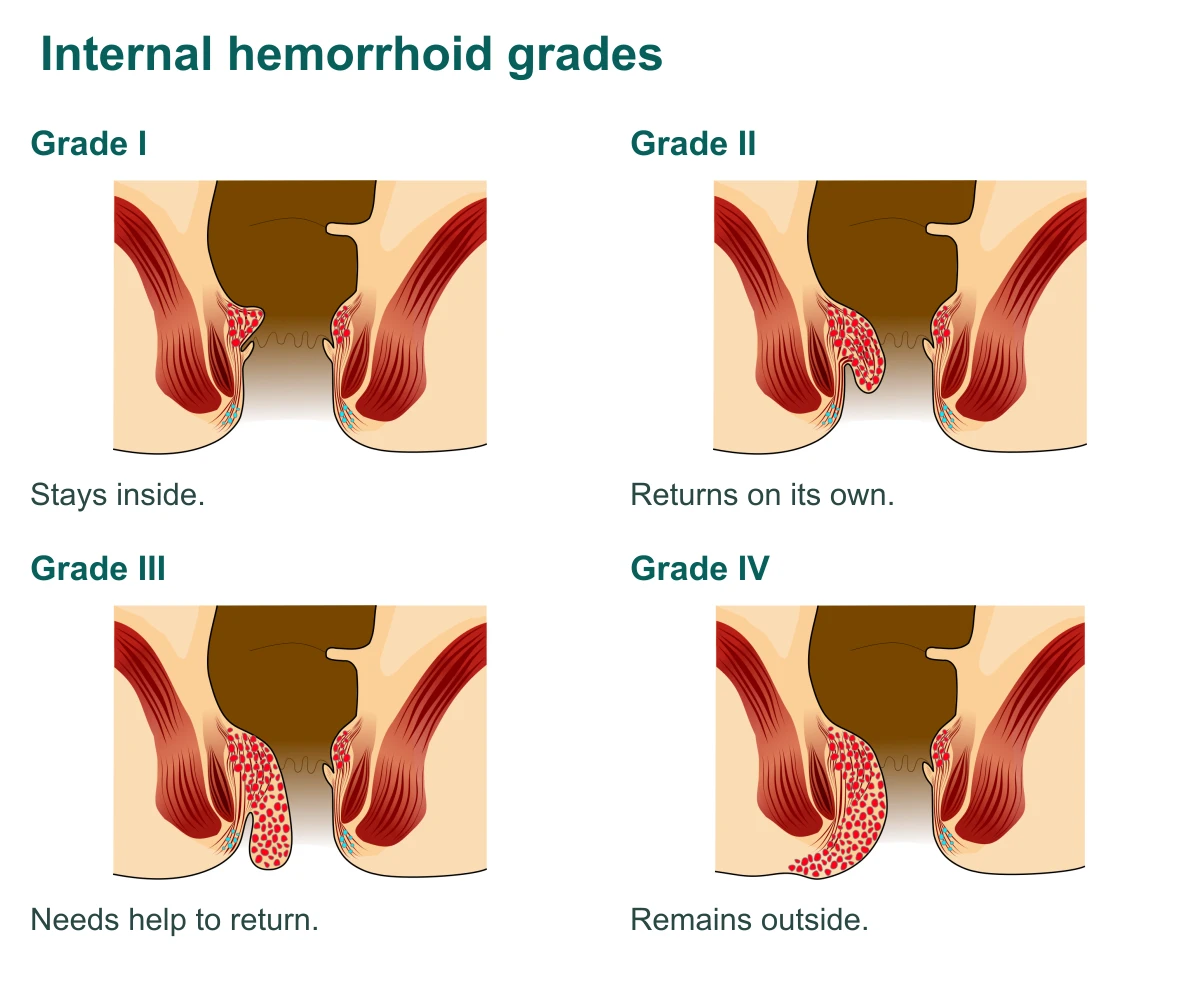
Grade III internal hemorrhoids prolapse and need manual reduction; grade IV hemorrhoids remain prolapsed and cannot be reduced. The 2024 ASCRS guideline recommends offering excisional hemorrhoidectomy to selected patients with external hemorrhoids or symptomatic combined internal and external disease, especially grades III and IV.
The American Gastroenterological Association's 2026 update refines this decision: for grade III, surgical consultation may be appropriate when banding has failed or external disease is also present; for grade IV, it recommends surgical hemorrhoidectomy. Two people who report hemorrhoids may therefore need very different treatments.
Options may remain before surgery
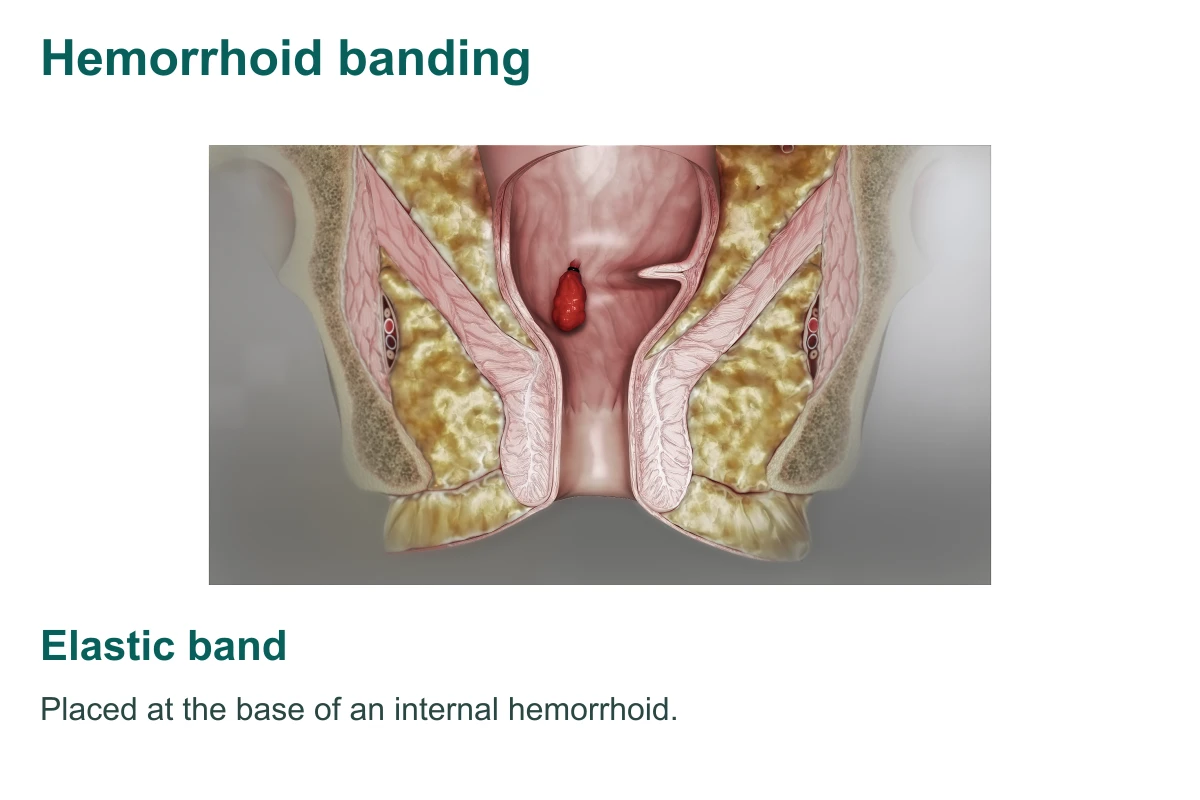
Most grade I and II cases and some grade III cases can be treated without excisional surgery. Office options include rubber band ligation, sclerotherapy and coagulation. ASCRS considers banding the most effective office treatment for many patients with internal disease.
If you are wondering when surgery is needed, an assessment does not necessarily lead to a surgical recommendation. It establishes whether outpatient treatment remains suitable or the anatomy and symptoms make surgery a reasonable option to discuss.
What if you are looking for laser surgery?
Dr. Eduardo Navarro uses laser surgery for selected cases of hemorrhoidal disease. Laser is a treatment tool, not a category that replaces diagnosis. First, the disease must be identified as internal, external or combined, with its degree of prolapse assessed.
A substantial external component does not automatically make laser appropriate. Examination helps determine whether an office procedure, laser technique, excisional surgery or another approach is preferable. Treatment should match the actual problem rather than the technology's name.
What a colorectal assessment establishes
The symptom history and examination establish whether hemorrhoidal disease is present and how it is classified. Anoscopy may be included when a better view of the anal canal is needed. This information allows comparison of suitable options, recovery and the likelihood of persistent or recurrent symptoms.
If you have prolapse, recurrent bleeding, repeated episodes or a previous treatment that did not resolve the problem, an assessment with Dr. Navarro can provide a specific answer about whether surgery is needed and which option is appropriate.
Clinical sources
Clinical sources consulted
This guide draws on information from medical and public health institutions to help you understand the topic.
- ASCRSclinical practice guideline for hemorrhoid management (2024)View source
- AGAdiagnosis and treatment of hemorrhoids (2026)View source
- PubMedAGA Clinical Practice Update on Diagnosis and Treatment of Hemorrhoids (2026)View source
- Hospital Civil de Guadalajaraguidance on hemorrhoidal diseaseView source
This content is informational and does not replace a medical assessment.