
Bleeding during a bowel movement
It identifies visible changes in the anal canal and lower rectum and assesses a possible source in that area.
Direct examination of the anal canal to guide care for bleeding, pain or discomfort
Anoscopy shows internal hemorrhoids, fissures, inflammation or other visible anal and lower rectal lesions. Dr. Eduardo Navarro combines findings and symptoms to choose care or further testing.
Dr. Eduardo Navarro LaraColorectal surgeon · Anorectal tests
What it shows
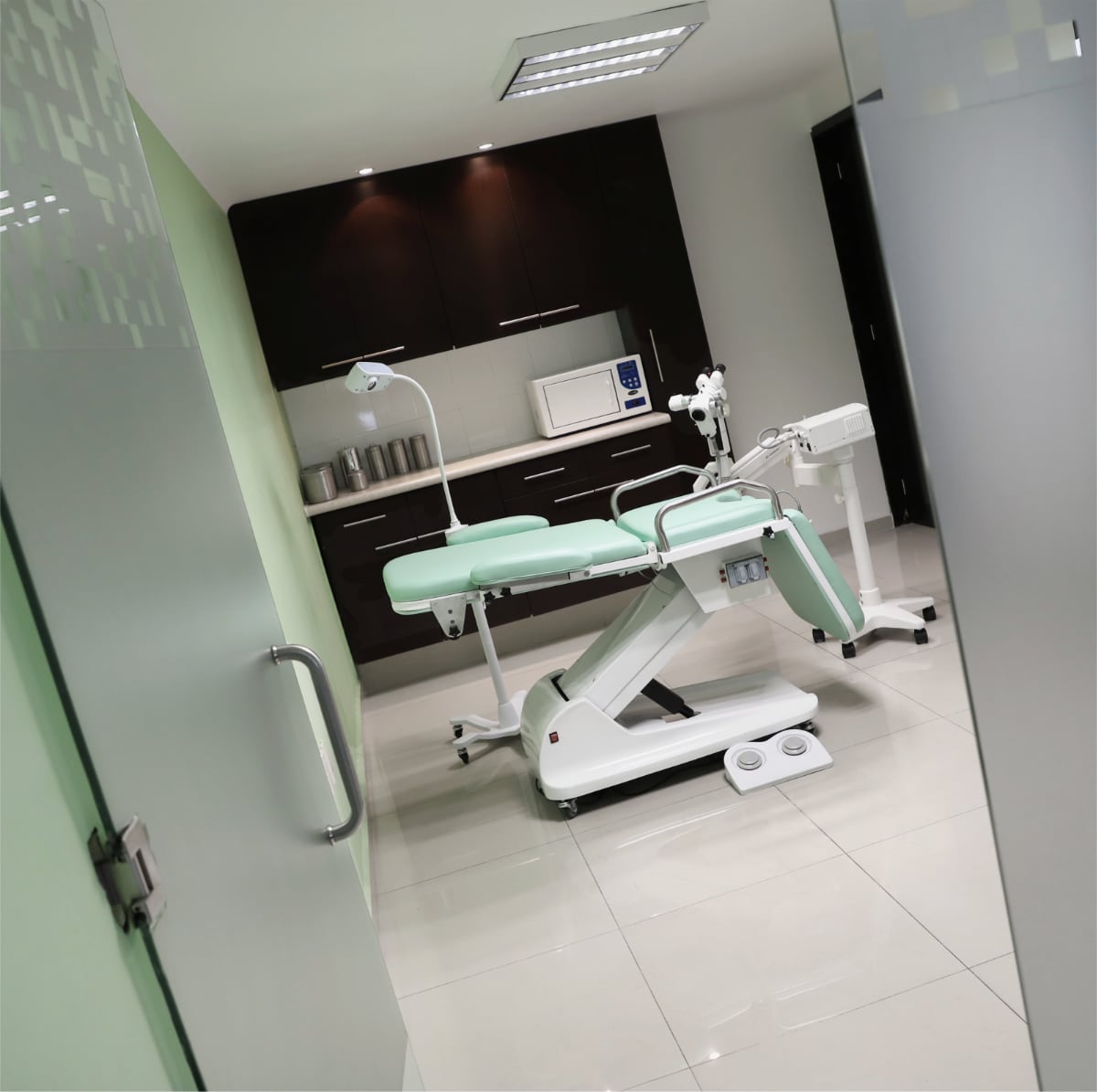
An anoscope is a short, illuminated instrument viewing lining not always visible externally.
Its value is relating findings to the bleeding, pain, itching, discharge or lump prompting consultation.
When it adds information
Assessment determines whether local examination answers the question or broader testing is needed.
It identifies visible changes in the anal canal and lower rectum and assesses a possible source in that area.
Examination relates symptoms to directly visible fissures, inflammation or other findings.
It may show lining changes and complement external examination for persistent symptoms.
It shows internal anal canal tissue not always visible externally.
Tests answering different questions
Choosing by name alone can miss the clinical question. Each test provides a different view.
Directly views the anus, anal canal and lower rectal lining.
Shows sphincters and surrounding structures when deeper anatomy affects decisions.
Explore endoanal ultrasoundExtends examination into the final large bowel when greater reach is needed.
Explore sigmoidoscopyFrom assessment to result
The test complements examination and symptoms; it does not replace assessment or independently determine treatment.
Check availabilityThe doctor reviews concerns, history and examination to decide which area needs viewing.
The team explains preparation and adjusts examination for severe pain, inflammation or other clinical considerations.
A short illuminated instrument views the lining directly.
Information is related to symptoms to guide treatment, follow-up or another test.
Possible findings
Findings are interpreted alongside the concern; they may guide treatment or require further tests.
Viewing the canal identifies internal hemorrhoidal tissue and its relation to bleeding or discomfort.
It may reveal tears, redness or inflammation in the examined lining.
Visible changes may need documentation, follow-up or further assessment according to their features.
It can complement fistula assessment without replacing imaging needed to define the full tract.
Before the test
Preparation varies with the reason, pain, medicines and additional interventions. The team provides the necessary instructions.
Examination scope
If bleeding, history or findings require broader examination, the doctor may consider sigmoidoscopy, colonoscopy or other assessment.
Specialist care
Dr. Eduardo Navarro Lara is a colorectal surgeon offering anoscopy in his current practice.
Assessment determines whether this examination adds needed information and relates findings to treatment options.
Explore his training and experienceCare for patients in Guadalajara, Zapopan and the metropolitan area
Our support team checks appointments at Unidad Médica Shakespeare or Torre de Consultorios Hospital Ángeles Andares. Test location and scheduling are confirmed during care.
Frequently asked questions
Direct examination of the anus, anal canal and lower rectum using a short illuminated anoscope.
Yes, along with other visible changes. Results are interpreted with symptoms and examination.
No. Anoscopy is limited to the anal canal and lower rectum; colonoscopy examines the whole large bowel.
No. Anoscopy views the inner surface; ultrasound shows sphincters and surrounding tissues.
No. High-resolution anoscopy uses magnification and an additional protocol to identify small tissue changes. This page describes conventional anoscopy.
Do not assume one is included. Sampling is an additional intervention depending on the finding, purpose and arrangements confirmed by the team.
Instructions vary. Confirm preparation with the team rather than using enemas or stopping medicines from general online guidance.
Simply ask about times and availability for assessment. Clinical details are reviewed during care.
Anoscopy
Request assessment with Dr. Eduardo Navarro to review symptoms and confirm the test providing needed information.