
Determine which test answers the question
Assessment reviews symptoms, history or reports and identifies missing information before treatment discussion.
Detecting and removing polyps when needed helps reduce colorectal cancer risk
The report and polyp features guide monitoring, colonoscopy, polypectomy or other treatment.
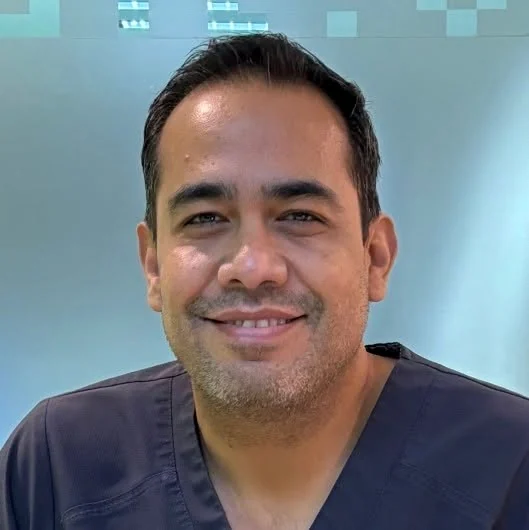
Dr. Eduardo Navarro LaraColorectal surgeon · Colon and rectal polyp assessment
After the finding
Small polyps can be removed during colonoscopy. Larger ones may not be removable this way.
Assessment reviews symptoms, history or reports and identifies missing information before treatment discussion.
Some polyps can be removed with instruments during colonoscopy. Tissue analysis completes information for planning.
If routine removal is unsuitable or findings need further attention, endoscopic and surgical options are compared.
Large polyps can be removed with minimally invasive robotic or laparoscopic surgery. TAMIS (transanal robotic surgery) is another option: robotic instruments pass through the anus, making the technique even less invasive.
Learn about laparoscopic surgery Learn about robotic surgery Learn about TAMISWhat to recognize
No pain does not mean the colon has no abnormalities. Testing may be recommended for history, prevention or symptoms needing assessment.
Important: bleeding or persistent bowel changes do not confirm a polyp; they warrant assessment.
What a polyp is
Most polyps are not cancerous. Some change over time, so identifying them and their type helps prevent future problems.
The word polyp alone describes neither risk nor treatment. Size, shape, number and tissue analysis supply further information.
Specialist assessment
Dr. Eduardo Navarro reviews information to explain the finding and factors changing decisions.
Schedule a consultationThe reason for consultation, personal or family history and available tests are reviewed.
The doctor explains whether to review a report, order a test or consider colonoscopy.
Polyp features and tissue analysis guide removal, surveillance or further assessment.
Clinical decision
Recommendations combine the finding, examination and medical history, not just an online report.
Polyps differ in appearance and potential progression. These details guide care.
Colon location and lesion shape guide removal during testing or another approach.
Analysis of a sample or removed polyp identifies its type and guides follow-up.
Previous polyps, colorectal cancer and test quality may also change the plan.
Specialist care
Dr. Eduardo Navarro Lara is a colorectal surgeon treating colon and rectal conditions, including colorectal polyps.
Consultation reviews tests, explains the finding's significance and discusses appropriate options.
Explore Dr. Eduardo Navarro's trainingCare for patients throughout Guadalajara, Zapopan and the metropolitan area
Our support team can help choose a location and confirm availability.
Office in Zapopan, Jalisco.
Office in Zapopan, Jalisco.
Frequently asked questions
Not necessarily. Most are not cancerous. Some types may progress over time, making type and tissue findings important.
Most do not. Bleeding or persistent bowel changes warrants assessment because other causes are possible.
Many can be removed with instruments during the examination. Size, shape, location and appearance determine suitability.
No. Interpret it alongside lesion features and tissue analysis when available. Surgery is considered only when justified.
Follow-up depends on polyp number, type, size and findings, previous examination quality and history. The interval is individualized.
Ask about times and location. Bring reports to consultation for private review and next-step decisions.
Take the next step
Care for patients in Guadalajara, Zapopan and the metropolitan area. Consult Dr. Eduardo Navarro at either Zapopan location to review findings, options and next steps.