Initial guidance
Key points
Not all anal bleeding or pain is caused by hemorrhoids. Internal hemorrhoids do not always hurt, creams may relieve symptoms without resolving every case, and surgery is not inevitable. The key is identifying the problem and treating it according to its anatomy and severity.
Myth: having hemorrhoids means you are ill
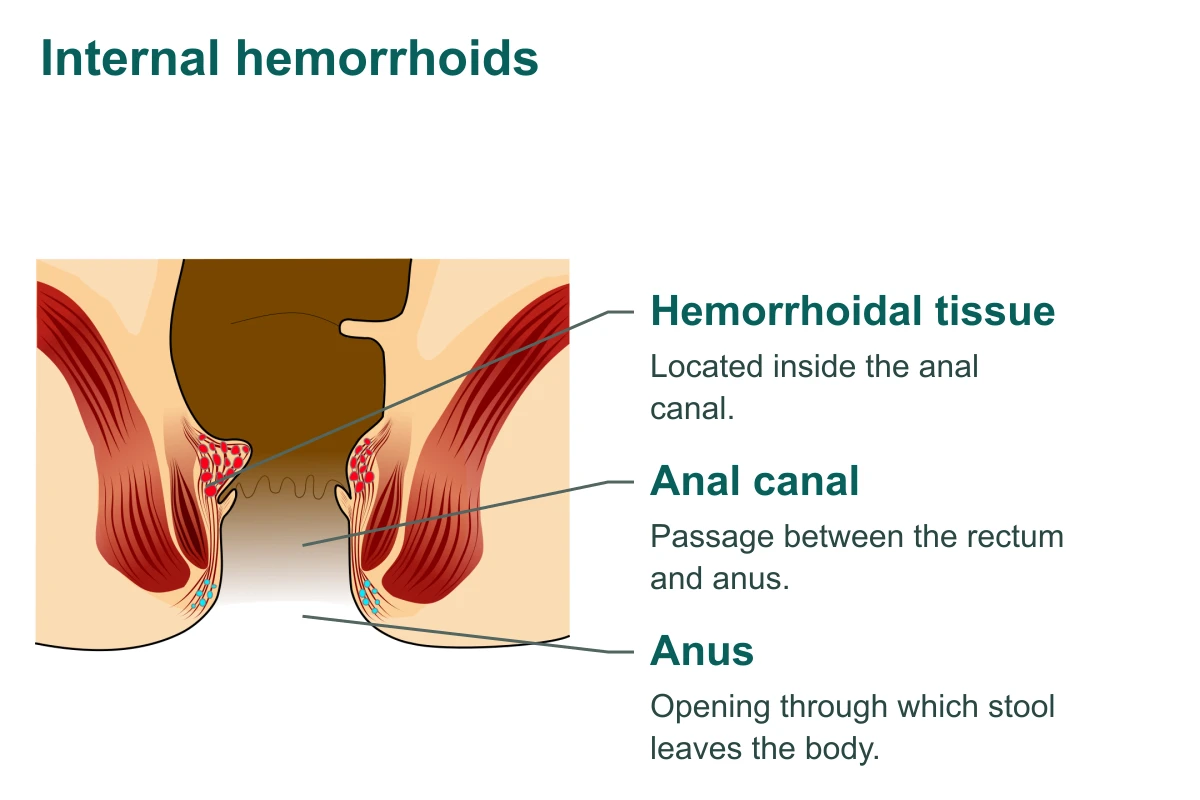
Hemorrhoidal cushions are a normal part of anal canal anatomy. Hemorrhoidal disease means these structures cause bleeding, prolapse, irritation or discomfort. IMSS likewise distinguishes normal hemorrhoidal structures from the disease that develops when they cause symptoms.
Fact: the aim is not to remove hemorrhoids simply because they exist, but to treat disease when it causes a clinical problem.
Myth: bleeding must mean hemorrhoids
Bright red bleeding during bowel movements is common in hemorrhoidal disease but does not confirm the diagnosis. Fissures, inflammation and other colon or rectal diseases can also bleed. ASCRS guidelines emphasize that rectal bleeding should not automatically be attributed to hemorrhoids.
Fact: new, recurrent or persistent bleeding despite treatment needs an identified cause rather than blind treatment.
Myth: hemorrhoids always hurt a lot
Internal hemorrhoids often cause bleeding or prolapse without pain. Sudden severe anal pain also raises the possibility of a thrombosed external hemorrhoid, a fissure or another cause requiring examination.
Fact: pain, bleeding, itching and a lump do not mean exactly the same thing. The symptom pattern guides what needs assessment.
Myth: a cream cures any hemorrhoid
Topical products may temporarily reduce itching, swelling or discomfort, but evidence for their effectiveness is limited and they do not correct substantial prolapse. The 2026 AGA clinical update retains fiber and bowel-habit changes as first-line care, with procedures or surgery for selected circumstances.
Fact: relieving a symptom does not always resolve its cause. Persistent or recurring discomfort calls for a different approach.
Myth: if home treatment fails, surgery is the only option
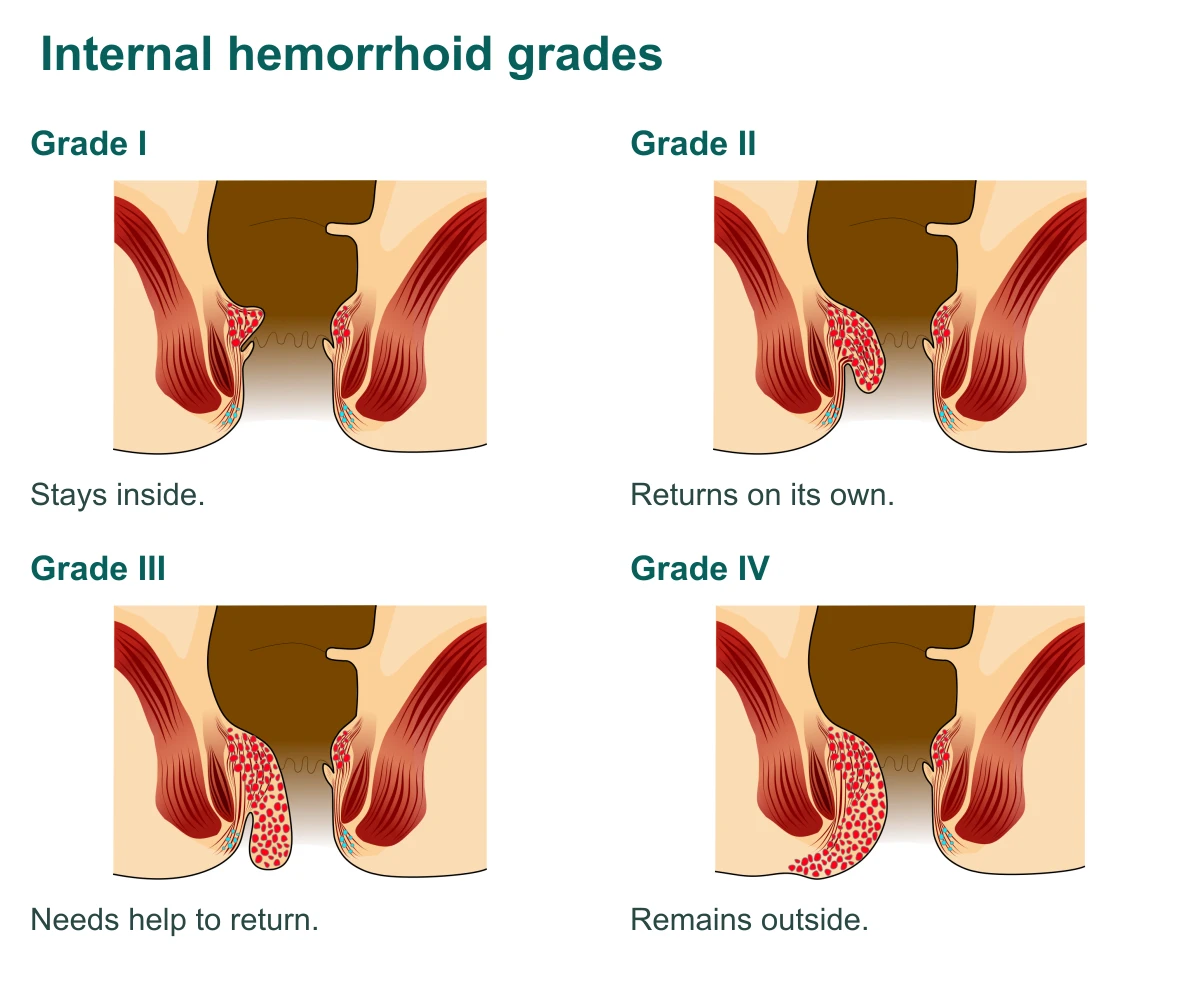
Between conservative care and surgery, office procedures such as banding are available for certain internal hemorrhoids. ASCRS considers most symptomatic grade I and II cases and some grade III cases unresponsive to conservative treatment suitable for outpatient procedures.
Fact: treatment is stepped up as needed. It depends on internal, external or combined disease, prolapse grade, bleeding, symptoms and previous treatment.
Myth: laser suits every hemorrhoid and requires no recovery
Laser is available for selected indications. It does not make all cases the same procedure or eliminate every risk or recovery period. Anatomy and the treatment goal still come first.
Fact: establish the type of hemorrhoidal disease before choosing technology. Our dedicated guide discusses laser benefits, risks and limitations in more detail.
What an assessment can establish when you still have questions
Consultation distinguishes commonly confused symptoms, internal, external or combined disease, and whether habit changes, an office procedure or discussion of surgery is appropriate.
If you have spent weeks treating bleeding, pain, itching or a lump as hemorrhoids without clear improvement, the next useful step is confirming what you are treating rather than adding remedies. Dr. Eduardo Navarro assesses colon, rectal and anal conditions in Zapopan to guide care from the diagnosis.
Clinical sources
Clinical sources consulted
This guide draws on information from medical and public health institutions to help you understand the topic.
- ASCRS 2024clinical guideline for hemorrhoid managementView source
- AGA 2026diagnosis and treatment of hemorrhoidsView source
- IMSShemorrhoids: causes, symptoms and treatmentView source
- MedlinePlushemorrhoidsView source
This content is informational and does not replace a medical assessment.