
Active infection
Increasing pain, swelling, pus or fever changes care priority.
Treatment to relieve pain and reduce further pilonidal episodes
Infection, discharge and progression determine whether drainage or another procedure is needed.
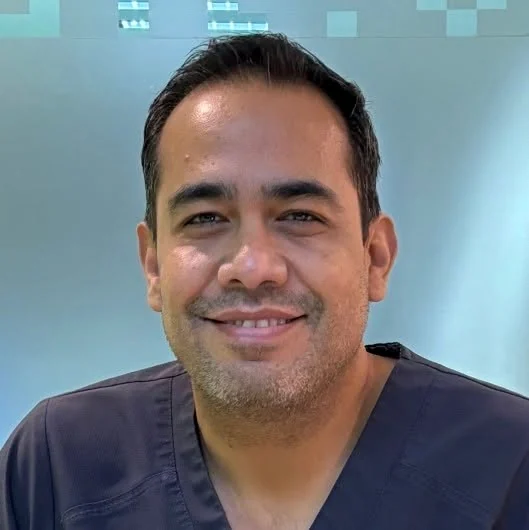
Dr. Eduardo Navarro LaraColorectal surgeon · Pilonidal assessment and treatment
Signs worth assessing
Symptoms may begin subtly or become painful and swollen quickly.
Important: the affected area is usually in the buttock cleft above the anus.
What pilonidal disease is
An inflammatory problem of hair follicles in the buttock cleft. It may appear as a pit, small tract beneath the skin, cyst or an abscess if infected.
Pilonidal cyst is a common term, but lesions and treatment needs vary.
Signs of active infection
A hot, red, very tender area with pus, fever or illness may indicate an abscess. Do not wait for WhatsApp if symptoms are severe or worsening.
Specialist assessment
Dr. Eduardo Navarro reviews progression and examines the area to understand changes beneath and on the skin.
Schedule a consultationAssessment reviews onset, drainage, severe pain, fever or previous treatment.
The doctor identifies pits, tracts, inflammation and infection to establish extent.
Findings guide monitoring, treatment of active infection or comparison of techniques for persistent disease.
Clinical decision
The aim is to control infection when present and treat tracts or episodes sustaining the problem.
Increasing pain, swelling, pus or fever changes care priority.
Single or multiple openings, persistent drainage and affected tissue beneath the skin matter.
A first problem is assessed differently from repeated episodes after treatment.
Activity, work, wound care and history help choose a realistic option.
Treatment options
Lump size or an image alone does not determine the best option.
Pits or mild symptoms without an abscess may be managed with hygiene, hair control and follow-up.
Collected pus initially needs opening and drainage. Antibiotics may be used selectively but do not replace abscess drainage.
Options range from minimally invasive techniques to surgery with different closure methods. Tracts, recurrence and findings guide the choice.
Specialist care
Dr. Eduardo Navarro Lara is a colorectal surgeon treating pilonidal disease, including abscesses, persistent tracts and recurrence.
Consultation explains options and chooses care considering findings and daily activities.
Explore Dr. Eduardo Navarro's trainingCare for patients throughout Guadalajara, Zapopan and the metropolitan area
Our support team can help choose a location and confirm availability.
Office in Zapopan, Jalisco.
Office in Zapopan, Jalisco.
Frequently asked questions
Not exactly. Pilonidal disease may be a pit, sinus or cyst. Infection with accumulated pus may form an abscess.
A painless, uninfected pit does not always need immediate treatment. Pain, drainage, repeated episodes or an abscess warrants assessment.
They may be prescribed selectively but usually do not replace drainage of collected pus.
No. Dr. Eduardo Navarro uses it selectively. Extent, tracts, active infection and previous treatment determine suitability.
Yes, particularly with persistent tracts or previous episodes. Follow-up and prescribed care help reduce further problems.
No. WhatsApp is for appointment times and location. Private in-person examination guides the next step.
Take the next step
Care for patients in Guadalajara, Zapopan and the metropolitan area. Consult Dr. Eduardo Navarro at either Zapopan location for a clear explanation of findings and treatment options.