Initial guidance
Key points
For symptoms that seem like hemorrhoids, aim for easy-to-pass stools, avoid straining and prolonged toilet sitting, and clean gently. Warm water may relieve pain or irritation. Rectal bleeding, severe pain or a very tender lump warrants earlier assessment rather than self-care alone.
Start by making bowel movements easier
Constipation, straining and prolonged toilet sitting increase pressure on hemorrhoidal tissue. Before considering products or procedures, make bowel movements easier.
Fiber-rich foods and adequate fluids help produce softer, easier-to-pass stools. Increase fiber gradually to reduce gas or bloating.
- Use the toilet when you feel the urge and avoid sitting longer than necessary.
- Avoid prolonged straining.
- Include fruit, vegetables, legumes and whole grains for fiber.
- Stay adequately hydrated to help fiber work.
Care for the area without adding irritation
Rubbing, repeated cleaning or handling a sensitive area may worsen itching and irritation. Clean gently after bowel movements and dry without rubbing.
A warm-water bath may temporarily relieve pain, burning or itching. Irritating additives are not needed.
Some symptoms should not wait for the scheduled appointment
A suddenly appearing, severely painful lump may be a thrombosed external hemorrhoid, though other lesions can also cause painful lumps. Early assessment for severe pain identifies the problem and appropriate care.
Rectal bleeding also needs an identified cause. If heavy or accompanied by dizziness, fainting, severe abdominal pain, diarrhea or fever, seek immediate medical attention.
Bring information that helps guide decisions
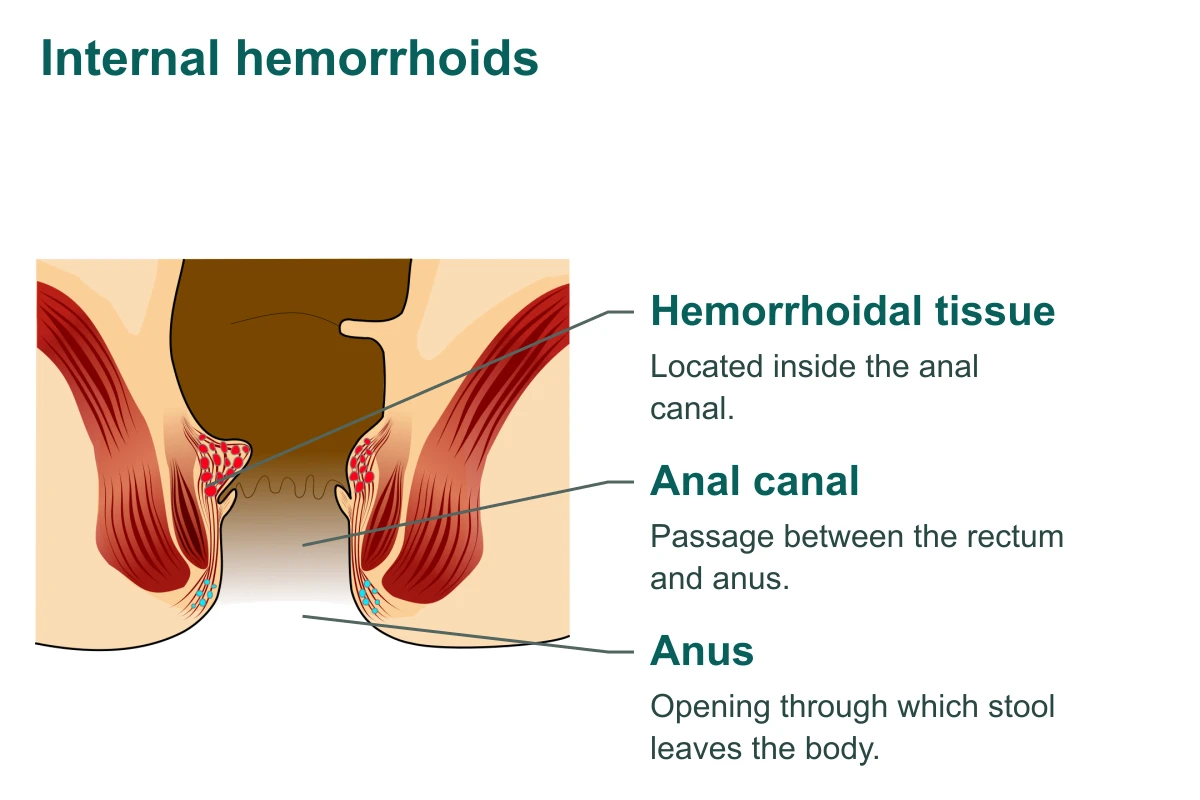
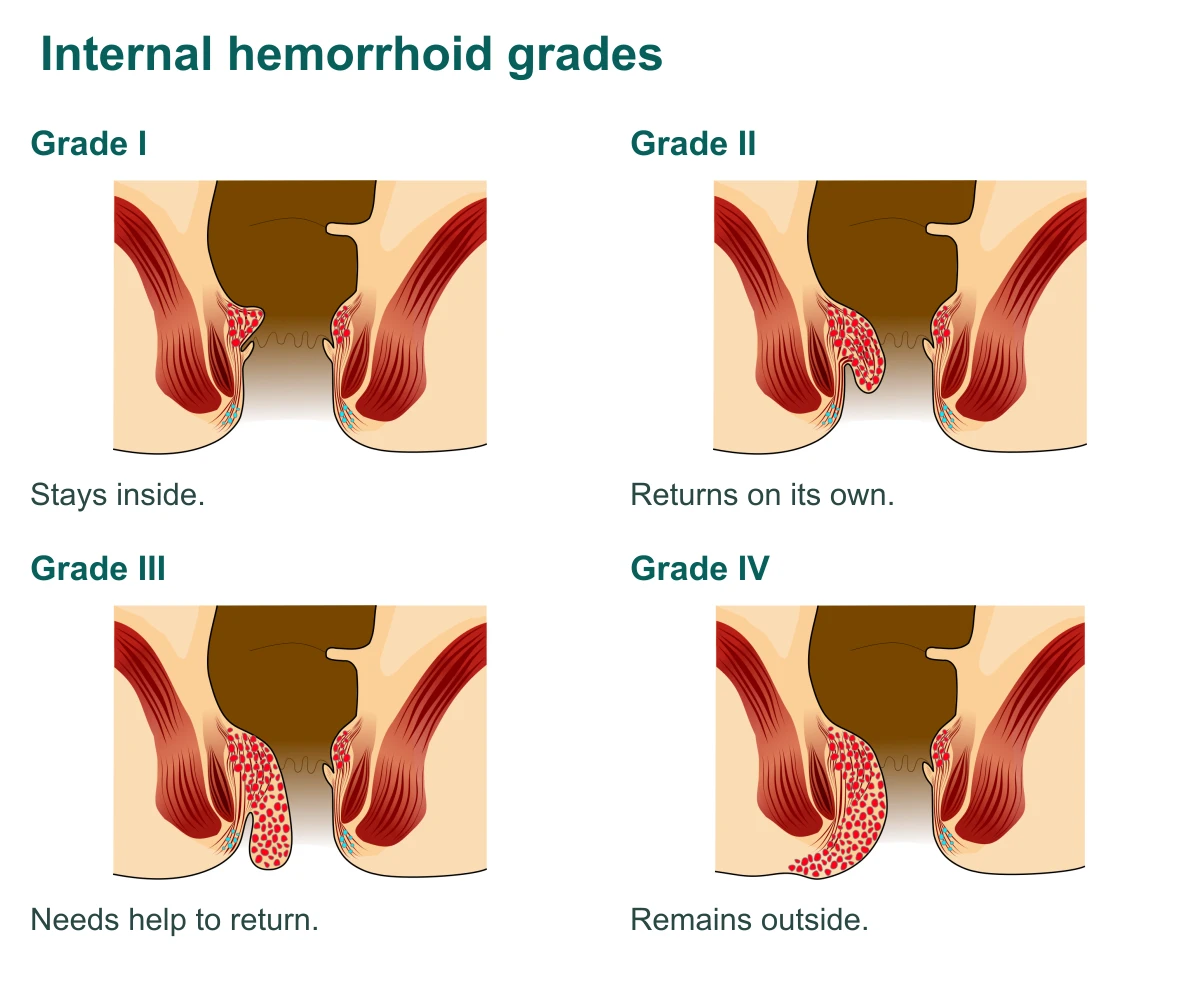
You do not need to know your hemorrhoid type. Note when symptoms began, whether bleeding, pain, itching or a lump predominates, and whether tissue protrudes during bowel movements and returns or remains outside.
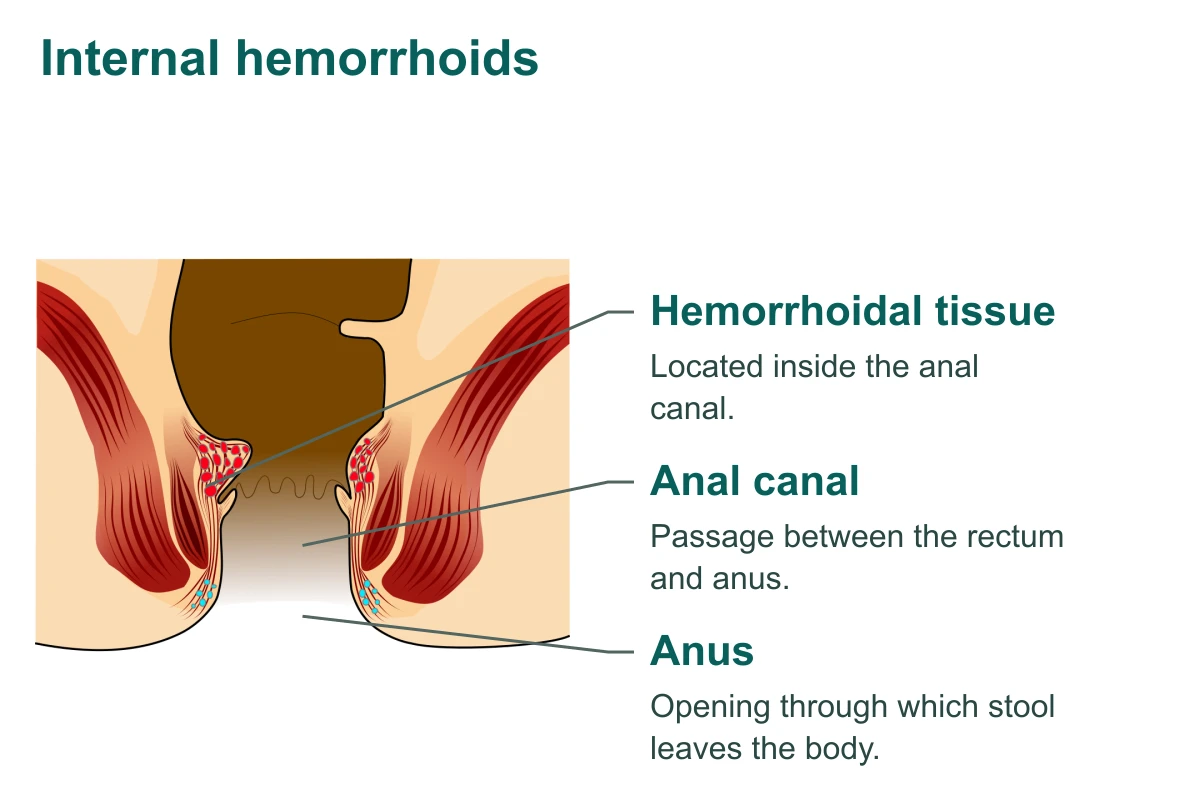
Describe bowel movements, constipation or diarrhea, products tried and regular medications. This information and examination help distinguish internal or external hemorrhoids from other causes of anal symptoms.
Assessment establishes what needs treatment, not just symptom relief
Hemorrhoid treatment varies. Location, prolapse, external tissue, bleeding and symptom severity change the available options.
For persistent or recurring symptoms affecting your day, Dr. Eduardo Navarro can assess the cause and explain suitable options. Less irritation and a clear history help make the most of the consultation.
Clinical sources
Clinical sources consulted
This guide draws on information from medical and public health institutions to help you understand the topic.
- ASCRSclinical practice guideline for hemorrhoid management (2024)View source
- NIDDKhemorrhoid treatment and self-careView source
- NIDDKhemorrhoid symptoms and causesView source
- IMSShemorrhoidal disease, fiber and assessment of bleedingView source
This content is informational and does not replace a medical assessment.