Initial guidance
Key points
A colorectal consultation starts with your symptoms and medical history. The examination is then chosen for its usefulness in your case: it may include inspection, a digital rectal examination or anoscopy, but not everyone needs exactly the same assessment. Consulting does not mean you will need surgery.
Myth: you must wait until the problem is serious
You do not need a diagnosis or severe discomfort before consulting. Bleeding, pain, a lump, discharge, itching, prolapse or stool leakage can warrant assessment when new, persistent or recurrent.
Consulting earlier is not about seeking a procedure. It helps identify the cause, make informed decisions and stop treating blindly a symptom with several possible origins.
Myth: the consultation starts with a painful examination
First, you discuss your symptoms, when they began, your bowel movements, any bleeding and previous treatments or tests. That information guides what should be examined next.
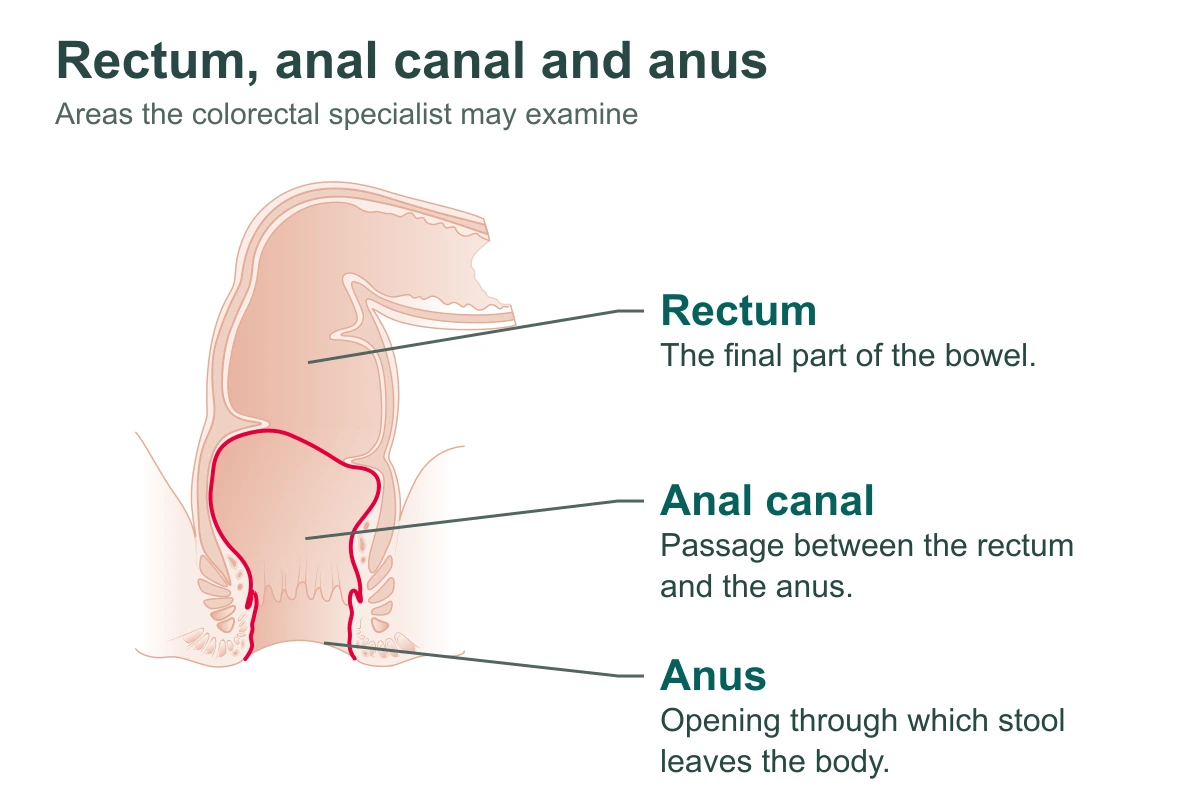
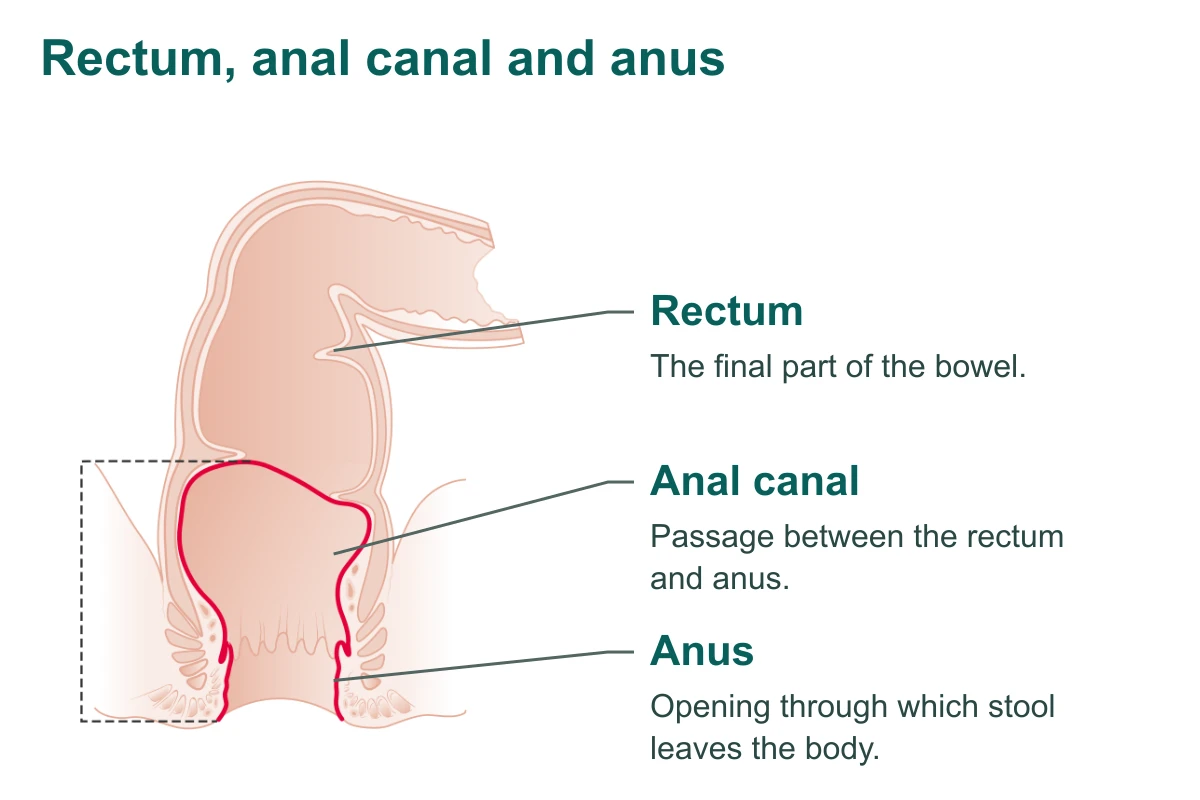
An anorectal examination differs between patients. It may begin with external inspection and include a digital rectal examination or anoscopy when informative. The IMSS clinical algorithm calls for explaining the procedure, protecting privacy and recognizing acute pain, such as a fissure or hemorrhoidal thrombosis, that may change how the examination is performed.
Myth: if it looks like a hemorrhoid, I know what it is
Bleeding, itching, pain or an anal mass does not point to a single diagnosis. Assessment for hemorrhoids also looks for fissures, irritation, skin tags, prolapse and other changes. Digital examination and anoscopy are used when they help distinguish the cause.
Arriving without a diagnosis does not mean you are late or unprepared. The consultation turns a symptom, such as bleeding, pain or a lump, into a clinical explanation and a next step.
Myth: seeing a surgeon means having surgery
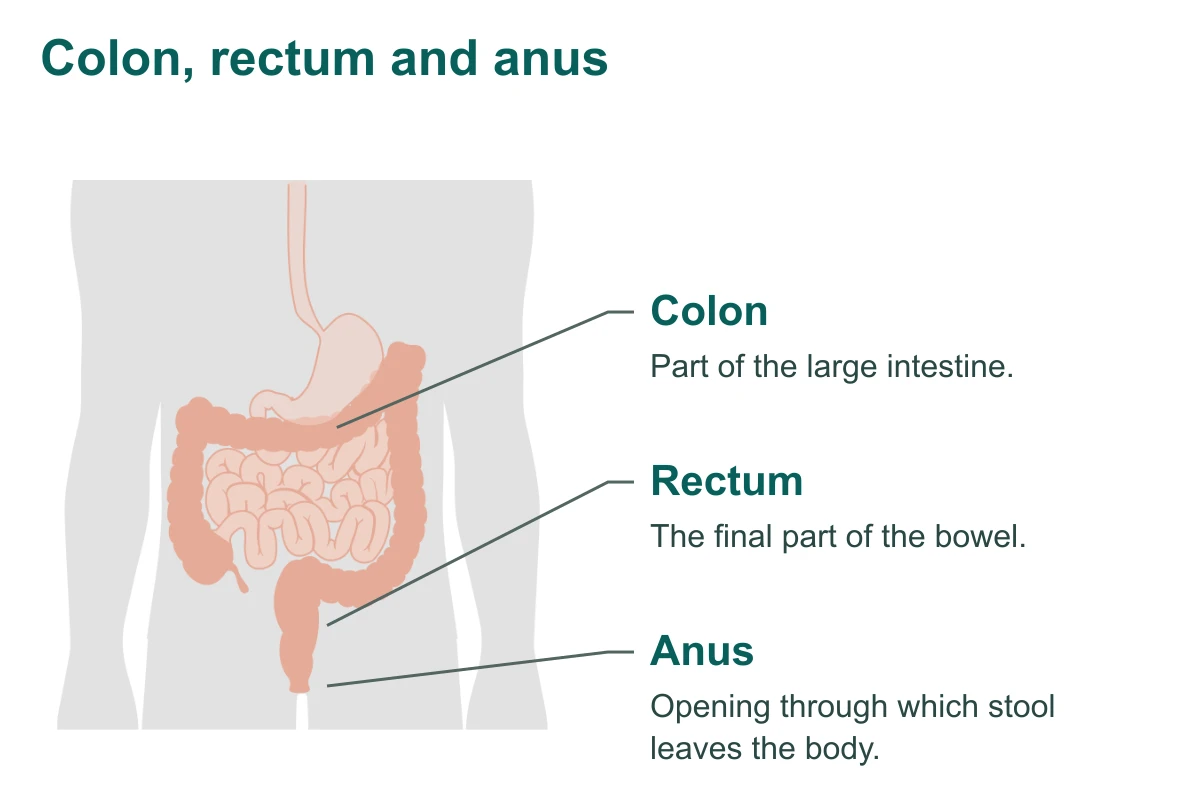
Colorectal care includes surgical and nonsurgical treatment of colon, rectal and anal disease. Depending on the problem, care may involve habit changes, medication, follow-up, tests, office procedures or surgery.
Assessing the problem before deciding establishes the appropriate level of treatment. Surgery is an option for particular conditions and circumstances, not the starting point for every consultation.
Myth: embarrassment makes these symptoms impossible to discuss
Discussing bleeding, bowel movements, leakage, discharge, pain or intimate symptoms may feel uncomfortable, but these details are clinical information. NIDDK recommends describing symptoms openly, even if you feel embarrassed or shy, because your account helps guide investigation and treatment.
Dr. Eduardo Navarro's public patient reviews repeatedly mention clear explanations, listening, respect and feeling comfortable during consultations. In a specialty where embarrassment can delay care, these patient experiences offer a relevant indication of trust.
What to bring to make the most of your assessment
You do not need a perfectly prepared medical history. It helps to remember when symptoms began, what worsens or improves them, how they have changed and what you have tried. Bring previous test results and a medication list if available.
If you have postponed care through fear of examination, embarrassment or hoping symptoms would disappear, an assessment with Dr. Navarro can help establish the cause and an appropriate next step.
Clinical sources
Clinical sources consulted
This guide draws on information from medical and public health institutions to help you understand the topic.
- IMSSclinical treatment algorithms: digital rectal examination techniqueView source
- NIDDKdiagnosis of hemorrhoidsView source
- NIDDKdiagnosis of fecal incontinenceView source
- ASCRSscope of colon and rectal surgeryView source
- Doctoraliapublic reviews of Dr. Eduardo Navarro LaraView source
This content is informational and does not replace a medical assessment.