
Initial guidance
Key points
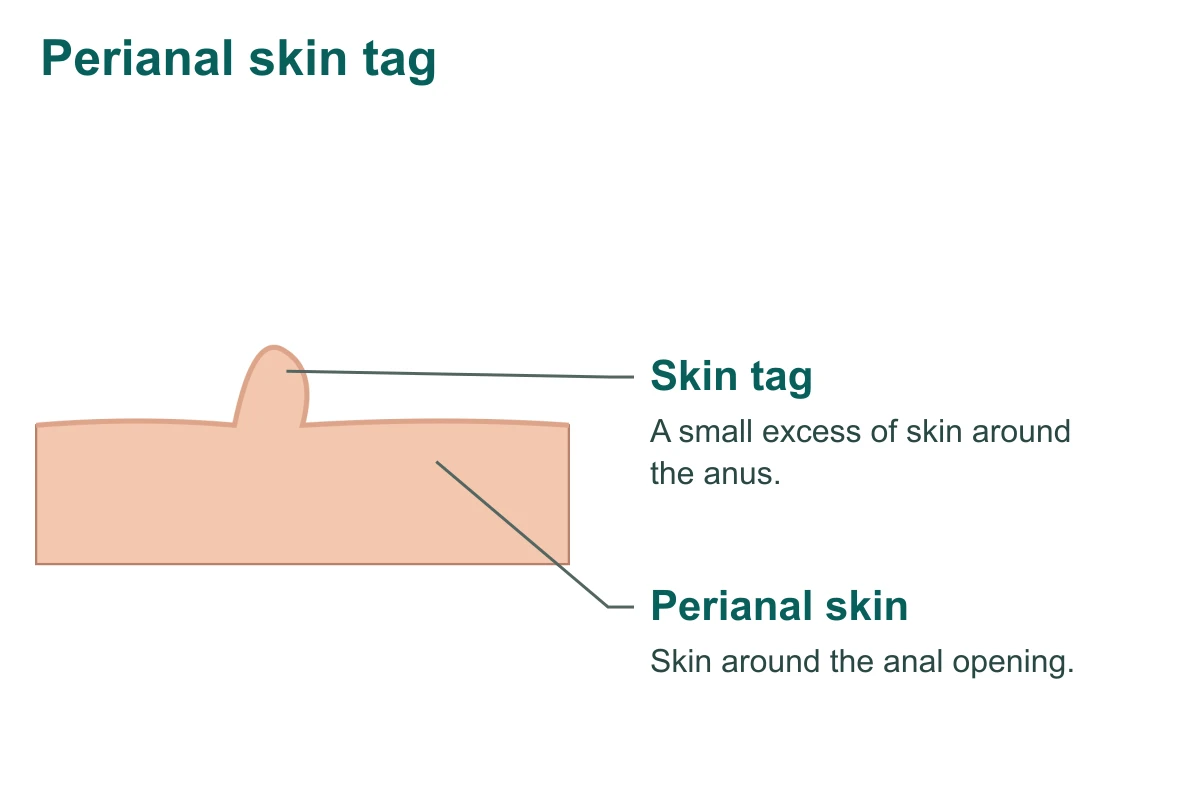
Anal skin tags, also called plicomas, are soft extensions of skin around the anus. They may remain after a thrombosed external hemorrhoid or accompany a chronic anal fissure. Usually painless, they can sometimes hinder cleaning, cause irritation or raise concerns about appearance.
Why skin may remain after a hemorrhoid
A clot in an external hemorrhoid stretches the overlying skin. After swelling settles and the clot is absorbed, the skin may remain as a small tag. NIDDK and ASCRS describe this as a common cause of residual skin tags.
Skin tags may also develop without a remembered episode. A chronic anal fissure can produce a fold at the lesion's edge known as a sentinel skin tag.
A skin tag is not an active hemorrhoid
The distinction matters. A thrombosed external hemorrhoid is usually a painful, swollen lump; a residual skin tag is generally soft and can remain after the episode has ended.
A true skin tag is usually benign, and many people need no treatment. Reasons to consult often include cleaning difficulties, itching, irritation, moisture, friction or simply wanting to identify the lump.
Pain or bleeding warrants identifying the actual cause
An isolated skin tag does not usually explain rectal bleeding or severe pain. Recurrent bleeding, significant pain, discharge, growth or recent changes warrant examination rather than attributing everything to the tag.
Examination distinguishes a skin tag from a hemorrhoid, a fissure with a sentinel tag, a wart or another perianal lesion. This can completely change the appropriate treatment.
Do skin tags need removal?
Not necessarily. ASCRS states that most tags need no intervention if they cause no problems. Removal may be considered for persistent hygiene difficulties, discomfort or significant personal concern.
Before removal, confirm the lesion type and whether a fissure, inflammation or another problem also needs care. The decision then addresses the actual cause and discomfort rather than appearance alone.
What an assessment with Dr. Navarro can establish
If you have noticed a skin fold for some time or after a hemorrhoid episode, colorectal assessment can identify it and whether action is needed. Mention hygiene difficulties, irritation, pain, bleeding or a changing lump at the start: that symptom guides examination.
You do not need to know whether it is a hemorrhoid, skin tag or fissure beforehand. Consultation distinguishes them and guides care according to the actual cause of discomfort.
Clinical sources
Clinical sources consulted
This guide draws on information from medical and public health institutions to help you understand the topic.
- NIDDKdefinition and complications of hemorrhoidsView source
- NIDDKdiagnosis of hemorrhoids and skin tagsView source
- ASCRShemorrhoids and anal skin tagsView source
- Acta Gastroenterológica Latinoamericanaskin tags and anal differential diagnosis (2024)View source
- NHSanal fissure and sentinel skin tagView source
This content is informational and does not replace a medical assessment.